


- FTTP replaces the final stretch of copper with a full fibre connection directly to your home.
- The nbn® fibre upgrade is expanding, with more FTTN and FTTC homes becoming eligible for nbn® FTTP.
- Check your address to see whether Fibre to the Premises is available now, coming soon or still being rolled out.

If you've been watching neighbours get upgraded to full fibre while your home is still connected to the nbn® using copper, there's some good news: your turn may be getting closer.
The nbn® fibre upgrade is expanding again, with NBN Co confirming that more than 99% of the approximately 600,000 premises remaining in its Fibre to the Node (FTTN) upgrade program are now expected to have access to an FTTP upgrade by December 2030.
That's an increase from the 95% estimate announced in January 2025, and plenty of the work is already underway. More than 577,000 of those remaining premises are progressing through detailed design, around 254,000 are under construction and approximately 91,000 are already eligible to order an upgrade.
Across Australia, more than 7.8 million homes and businesses can now access fibre. So, if you're still connected via FTTN or Fibre to the Curb (FTTC), the question is increasingly becoming: when will the nbn® fibre upgrade reach my home?
You may not need to wait for a letter to find out!
Check your address today with Compare Broadband to see your current nbn® connection, whether an FTTP upgrade is available and which plans you can access. Got questions about FTTP? Great!
- What's changed with the nbn® fibre upgrade?
- How do I know when my home is getting FTTP?
- Am I eligible for an nbn® fibre upgrade?
- Is the nbn® fibre upgrade free?
- What if my address says an FTTP upgrade is coming?
- What if my address isn't eligible for an FTTP upgrade yet?
- Do I have to wait until 2030 for my nbn® upgrade?
- Will NBN Co tell me when I can upgrade?
- Why is the nbn® upgrading FTTN homes to FTTP?
- Will an FTTP upgrade make my internet faster?
- What happens when you order an nbn® FTTP upgrade?
- My neighbour has FTTP. Why don't I?
- Check your nbn® fibre upgrade eligibility today
What's changed with the nbn® fibre upgrade?
The latest update significantly increases the proportion of Australia's remaining FTTN network expected to receive an upgrade to Fibre to the Premises.
In January 2025, NBN Co estimated that 95% of the remaining FTTN network would ultimately have an FTTP upgrade pathway. Following more detailed network design work, that figure has now increased to more than 99%, with the remaining FTTN upgrade program expected to be completed by December 2030. But that doesn't mean everyone has to wait until 2030.
The nbn® fibre upgrade is happening progressively. Some homes can already order FTTP, others are in areas where construction is underway and some are still waiting for work to begin.
December 2030 is the expected completion point for the remaining FTTN upgrade program, not a single date when full fibre will suddenly be switched on across Australia. Your home could therefore become eligible much sooner.
How do I know when my home is getting FTTP?
Unfortunately, there isn't one national timetable telling every Australian household exactly when fibre will arrive at their front door.
The FTTP upgrade is being rolled out progressively, and availability can differ between individual properties, even within the same suburb. NBN Co says factors including construction complexity and environmental considerations can affect which premises become eligible and when.
That's why seeing an nbn® crew working down the road, or discovering that somebody two streets away has already received an nbn® FTTP upgrade, doesn't necessarily mean you can order yours today.
Checking your individual address gives you a much clearer answer than simply searching by suburb or postcode.
Depending on where your home sits within the rollout, you might discover that full fibre isn't available yet, that an upgrade is planned or that you're already eligible to connect. And if you checked six or twelve months ago, it's worth checking again. nbn® fibre upgrade eligibility can change as construction progresses.
Am I eligible for an nbn® fibre upgrade?
Your eligibility depends primarily on your current nbn® connection and whether upgrade work has reached your address.
The current program is progressively replacing copper-based FTTN connections with Fibre to the Premises, while eligible FTTC customers can also request an upgrade to full fibre.
Approximately 91,000 premises included in the remaining FTTN upgrade program were already eligible to order FTTP when NBN Co announced its September 2026 update.
If your address is eligible for an nbn® fibre upgrade, you can generally arrange the move through a participating internet provider. Your provider can confirm which plans are available and organise the required nbn® installation.
- For FTTN customers using the Fibre Connect upgrade pathway, plan eligibility requirements can apply, so check the conditions before changing plans.
- FTTC households received an important change on 1st July 2026. NBN Co removed the previous requirement for FTTC customers to order a high-speed plan to qualify for an FTTP upgrade.
That means eligible FTTC households can request full fibre without moving onto a faster speed tier simply to qualify.
Is the nbn® fibre upgrade free?
For many eligible households, a free nbn® fibre upgrade is available through NBN Co's fibre upgrade programs.
That doesn't mean every possible cost associated with changing your home internet disappears.
Standard installation can be provided without an additional fibre upgrade charge at eligible premises, but eligibility and plan requirements can apply depending on your existing connection and the upgrade pathway you're using. Additional charges may also apply where non-standard installation work is required.
For FTTN customers using Fibre Connect, you may need to order an eligible plan through a participating provider before the upgrade can proceed. For eligible FTTC customers, the rules changed in July 2026 and a high-speed plan is no longer required simply to access the full-fibre upgrade.
So, before signing up to a more expensive internet plan because you think it's the only way to get fibre, check the rules that apply to your particular address and connection type.
What if my address says an FTTP upgrade is coming?
This is the slightly frustrating middle ground. You know fibre is on its way, but you can't order it yet.
It generally means your property is within the planned upgrade footprint but the work required to make FTTP available hasn't been completed.
An nbn® FTTP upgrade involves considerably more than simply running a new cable past your house. Detailed network design needs to take place first. Construction follows, and only after the necessary infrastructure is ready can individual addresses become eligible to order an upgrade.
More than 577,000 of the premises remaining in the FTTN upgrade program are progressing through detailed design, with around 254,000 under construction. If your address isn't ready yet, it could therefore already be somewhere within that process.
Keep checking your address periodically. Your nbn® upgrade eligibility can change as work progresses.
Source: NBN Co
What if my address isn't eligible for an FTTP upgrade yet?
A "not eligible" result today doesn't necessarily mean your home will never receive full fibre.
NBN Co says more than 99% of the approximately 600,000 premises remaining in its FTTN upgrade program are expected to have access to FTTP by December 2030. There will still be individual properties where an upgrade is particularly difficult because of construction or environmental factors, so that 99% figure shouldn't be read as a guarantee for every individual home.
However, if you're currently connected using FTTN and aren't eligible today, there's a very good reason to keep checking as the nbn® fibre upgrade continues. Your address may simply not have reached the order-ready stage yet.
Do I have to wait until 2030 for my nbn® upgrade?
No.
December 2030 is the expected completion date for the remaining FTTN upgrade program, not the date when every remaining home becomes eligible. The rollout is happening now.
Your home could become eligible for an FTTP upgrade well before 2030. That's also why periodically checking your address makes more sense than simply marking 2030 in the calendar and forgetting about it.
Will NBN Co tell me when I can upgrade?
Alongside the voluntary Fibre Connect program, NBN Co has announced a separate Targeted Upgrade program designed to move selected homes and businesses from legacy copper connections to full fibre. The first approximately 130,000 homes and businesses targeted through this program are expected to begin receiving NBN Co-led notifications from July 2027.
This is different from choosing to order an nbn® fibre upgrade when your address becomes eligible through the regular upgrade program.
The Targeted Upgrade program will focus on particular parts of the copper network, including situations where copper lines are underperforming or where retiring an underused node would simplify the network. Households selected for the Targeted Upgrade program won't have to order a high-speed nbn® plan simply to receive the upgrade.
NBN Co says suspension of legacy copper services under this program isn't expected to begin before January 2028 and would only be used as a last resort where an upgrade order hasn't been placed. But if your home becomes eligible for a voluntary FTTP upgrade beforehand, you don't necessarily have to wait to receive one of these notifications.
Why is the nbn® upgrading FTTN homes to FTTP?
The difference comes down to the final stretch of the connection. With FTTN, fibre runs into your local area but stops at a neighbourhood node. The existing copper telephone network then carries the connection from the node to individual properties.
That copper section can limit the speeds available to a household, with factors such as the distance between the home and node and the quality of the copper potentially affecting performance. FTTP removes that final copper section.
With Fibre to the Premises, fibre runs directly to the property, giving the connection considerably more capacity and removing many of the limitations associated with ageing copper infrastructure. NBN Co describes FTTP as its most resilient, reliable and fastest residential connection technology. It can provide more consistent performance, lower latency and access to faster nbn® speed tiers. And those faster tiers have become considerably faster.
Following the Accelerate Great changes introduced in September 2025, eligible FTTP customers gained access to substantially faster wholesale speed tiers, including multi-gigabit services offering up to 2,000Mbps. That doesn't mean everyone with an nbn® FTTP upgrade suddenly needs an nbn® 2000 plan. A household that mostly browses the web, streams Netflix and makes the occasional video call may be perfectly happy on a much slower speed tier.
The advantage of FTTP is choice. The connection itself gives you more flexibility to choose the speed your household needs now and upgrade later if your internet use changes.
Will an FTTP upgrade make my internet faster?
Not automatically.
An FTTP upgrade changes the technology connecting your property to the nbn®. The speed you actually pay for is determined by the nbn® plan you order. If you move from FTTN to FTTP but continue using a similar speed tier, your 50Mbps plan isn't suddenly going to become a 500Mbps service. What changes is the capability of the underlying connection.
Once you're on FTTP, you may have access to faster plans that weren't available through your previous FTTN or FTTC connection. Your experience inside the house can also be affected by your router, Wi-Fi coverage and devices. There's little point paying for an ultra-fast nbn® plan if an old router sitting in a cupboard becomes the bottleneck between the fibre connection and your laptop.
Once your nbn® fibre upgrade is available, compare the speed tiers and providers available rather than automatically choosing the fastest plan.
What happens when you order an nbn® FTTP upgrade?
Moving from FTTN or FTTC to FTTP requires physical work at your property because fibre needs to be extended all the way to the premises. After ordering an eligible service through a participating provider, the provider will help arrange the required installation with an nbn® approved technician.
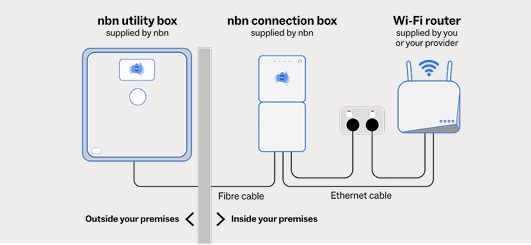
New nbn® equipment will generally need to be installed outside and inside the property, and some installations may require more than one technician visit. If you're renting, you'll usually need permission from the property owner because installation can involve drilling and, in some cases, digging.
Your existing connection isn't simply removed before you know whether the new one works. NBN Co says the FTTP connection is installed in parallel with the existing FTTN or FTTC service. Once your provider confirms the new fibre service is active, your internet service can move across to the new connection.
My neighbour has FTTP. Why don't I?
It feels slightly ridiculous when somebody two doors down has full fibre and your address checker still says no, but it's possible. Two properties that look almost identical can sit at different stages of the nbn® fibre upgrade.
Existing infrastructure, network design, construction complexity and environmental considerations can all influence when individual premises become eligible.
The rollout doesn't necessarily happen one complete suburb at a time either. So, while seeing neighbours receive FTTP is a good indication that fibre work is happening around you, it isn't proof that your individual property is ready to connect.
Check your nbn® fibre upgrade eligibility today
Australia's move towards full fibre is gathering pace. More than 7.8 million homes and businesses can already access fibre, while more than 99% of the approximately 600,000 premises remaining in the FTTN upgrade program are now expected to have an FTTP upgrade pathway by December 2030.
More than 577,000 are progressing through detailed design, around 254,000 are under construction and approximately 91,000 are already eligible. But national rollout numbers can't tell you what's happening at your house.
An address check can. If you're still using FTTN or FTTC, don't know your current connection type or checked your eligibility months ago, it's worth looking again.
Check your address today with Compare Broadband or call our team on 1300 764 000 to see whether you're eligible for an nbn® fibre upgrade and compare the nbn® plans currently available at your home.
 Loading...